

Serving San Diego County · CSLB #452824
Mon–Fri 8am–6pm
San Diego Pool Resurfacing Specialists
Restore the beauty
of your pool.Pool Plastering & Resurfacing in San Diego, CA
Baja Pool Plaster has specialized in re-plastering worn swimming pool surfaces since 1984. We replace rough, stained and cracked interiors on residential and commercial pools with a new plaster, quartz or pebble finish — and when a pool does not need replastering, we tell you that instead.
- Pool Plastering Since 1984
- CSLB License #452824
- Free On-Site Estimates

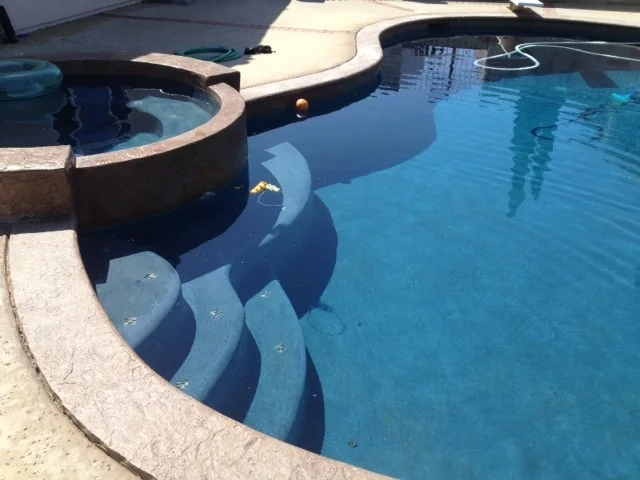
Before

After
Pool Replastering · San Diego County
View Transformation
Licensed & Insured
A licensed California contractor — CSLB License #452824.
Estimates From the Owner
Ruben Castillo has personally handled his own estimates since 1984.
Pool Surfaces Are the Specialty
Re-plastering and resurfacing is the work — not a sideline service.
Written Estimates On Site
You get the number in writing at the pool — estimates and advice are free.
Our Services
Pool surface work for San Diego County pools
A pool interior is a wearing surface. Plaster roughens, stains set in, color goes patchy and hairline cracks appear. These are the services we use to take a pool from a failing interior back to a smooth, sound, well-finished surface built to last for years.

Pool Resurfacing
Replacing worn plaster, quartz or pebble interiors on residential and commercial pools with a smooth, durable new surface.
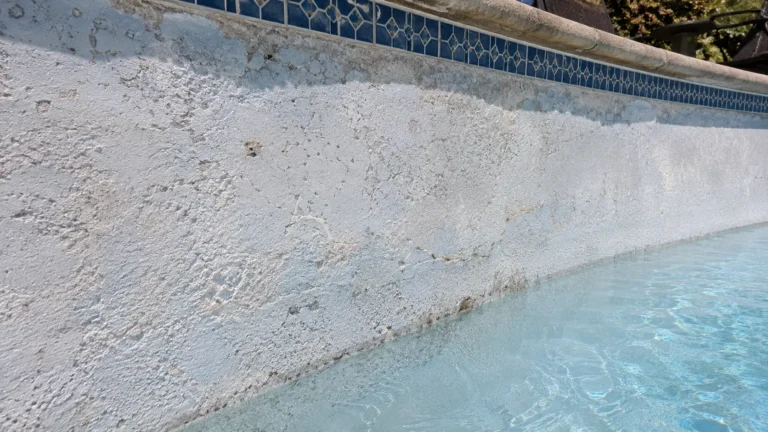
Pool Surface Repair
Diagnosing what is actually happening beneath the surface — etching, delamination, staining — and correcting it rather than patching over it. Sometimes an acid wash, acid rinse or a minor repair is all a pool needs.

Concrete Pool Crack Repair
Structural cracking in a concrete or gunite shell gets addressed first — before any new interior finish is installed over the top of it.

Pool Leak Detection & Repair
Water loss that evaporation cannot explain, traced to its source — the shell, the plumbing or the equipment pad — and repaired before it undermines the deck or the finish.

Pool Remodeling & Renovation
When resurfacing alone will not get you where you want to be, a broader renovation may be the better use of the budget.
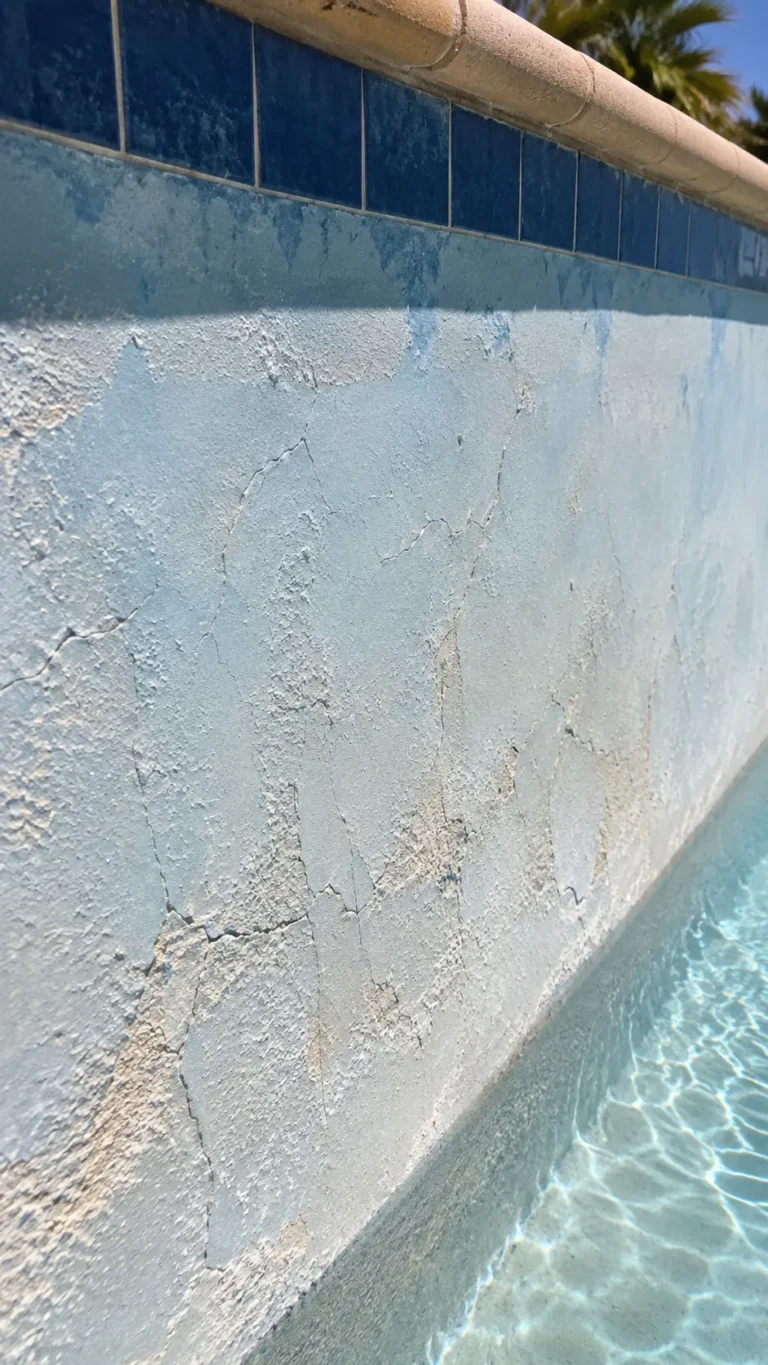
Worn interior finish

Pool Resurfacing
How do you know when your pool needs resurfacing?
A pool generally needs resurfacing once the interior feels rough underfoot, stains stop responding to cleaning, the color has faded unevenly, or the surface is cracking, etching or flaking — signs that the finish layer itself is wearing out rather than simply being dirty.
Plaster is not only cosmetic. It is the barrier between pool water and the concrete or gunite shell underneath. Once it thins, water chemistry starts working on the structure itself, and a routine resurfacing job turns into a much larger repair. Acting while the damage is still cosmetic is almost always the cheaper path.
- Rough, sandpaper-like texture
- Staining that will not scrub away
- Cracking, chipping or etching
- Water that stays cloudy
- Unexplained water loss
- 15–20 years without resurfacing
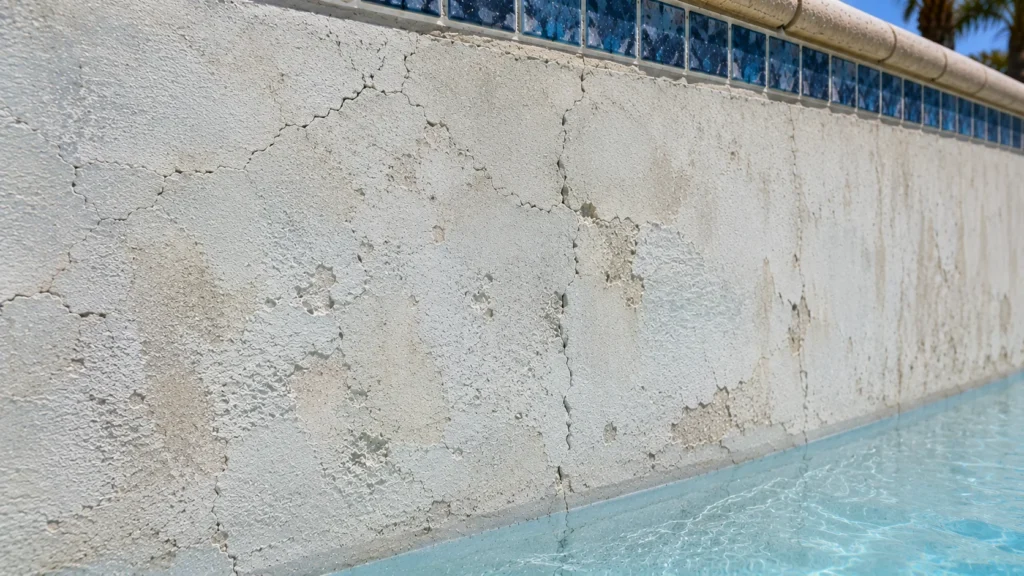
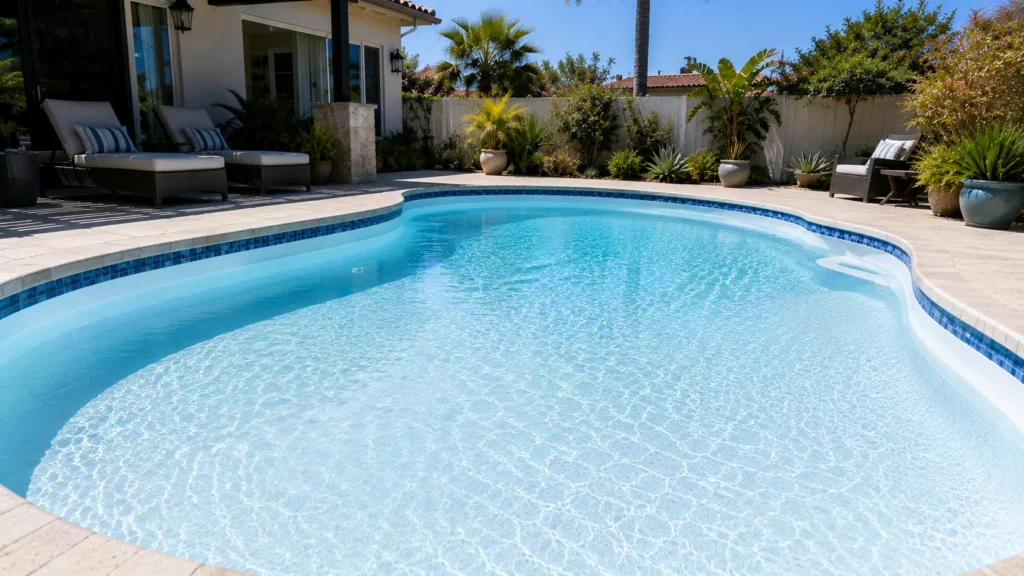
Pool Transformations
See what a new pool finish can do.
Drag the handle to compare a worn interior against a sound one. The change homeowners notice first is the color of the water — but the change they feel is the surface itself.
- Existing condition Rough, stained interior that no longer cleans up.
- Surface preparation Pool drained, old surface taken back to the shell.
- Repairs Cracks, chips and imperfections corrected before anything is applied.
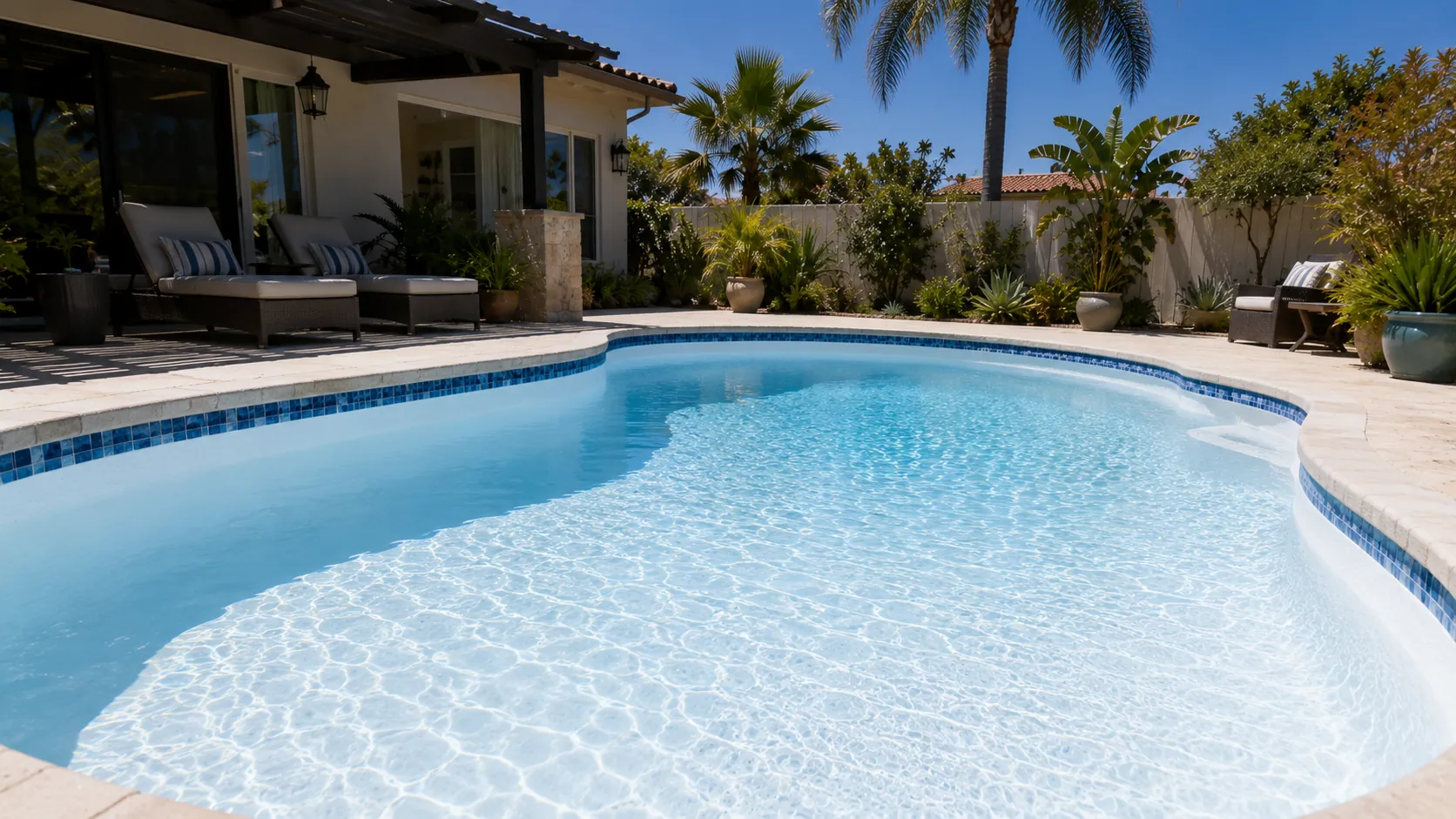
- Completed result New plaster, quartz or pebble finish, refilled and started up.
Pool Finish Options
Choose a finish that changes the look of your pool
Baja Pool Plaster installs traditional plaster, quartz and pebble finishes in a range of colors. The finish you choose controls the color of the water, how the surface feels underfoot, and how the pool reads from the patio.
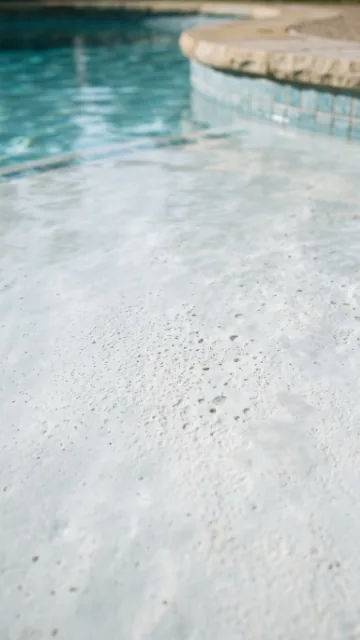
Finish 01
Traditional Plaster
The classic cement-based pool interior and the most affordable of the three — the familiar look in most residential pools, in white or color plasters.
- Character
- Clean, classic
- Texture
- Smooth
- Color
- White & color plasters
- Suited to
- Traditional pools
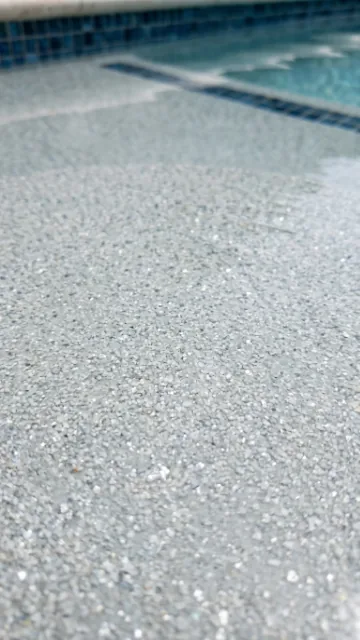
Finish 02
Quartz Aggregate
Plaster blended with quartz aggregate. It adds durability over standard plaster and opens up a wider range of colors and surface character.
- Character
- Richer, more even
- Texture
- Lightly textured
- Color
- Broad color range
- Suited to
- Color upgrades
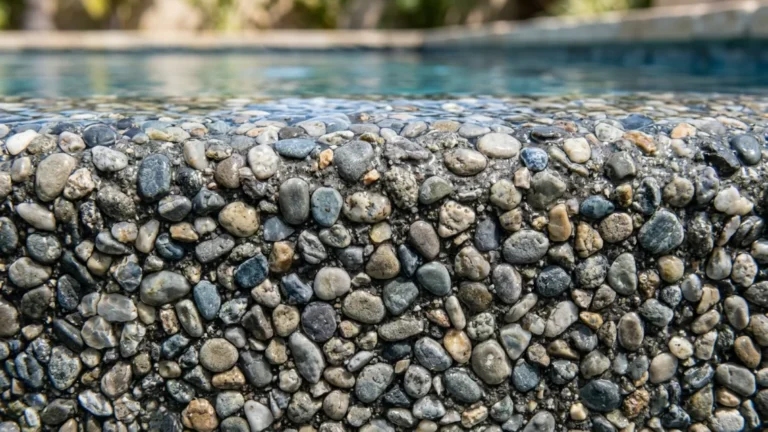
Finish 03
Pebble Finish
Exposed pebble aggregate — the most durable and most textured of the three, often chosen for long-term wear resistance and deeper water tones.
- Character
- Natural, layered
- Texture
- Pronounced
- Color
- Deeper water tones
- Suited to
- Long-term durability
The right finish depends on budget, appearance and how the pool is used. Ruben will go through the options with you at the pool, against your own coping, decking and water. Compare them first in quartz vs pebble and PebbleTec vs plaster.
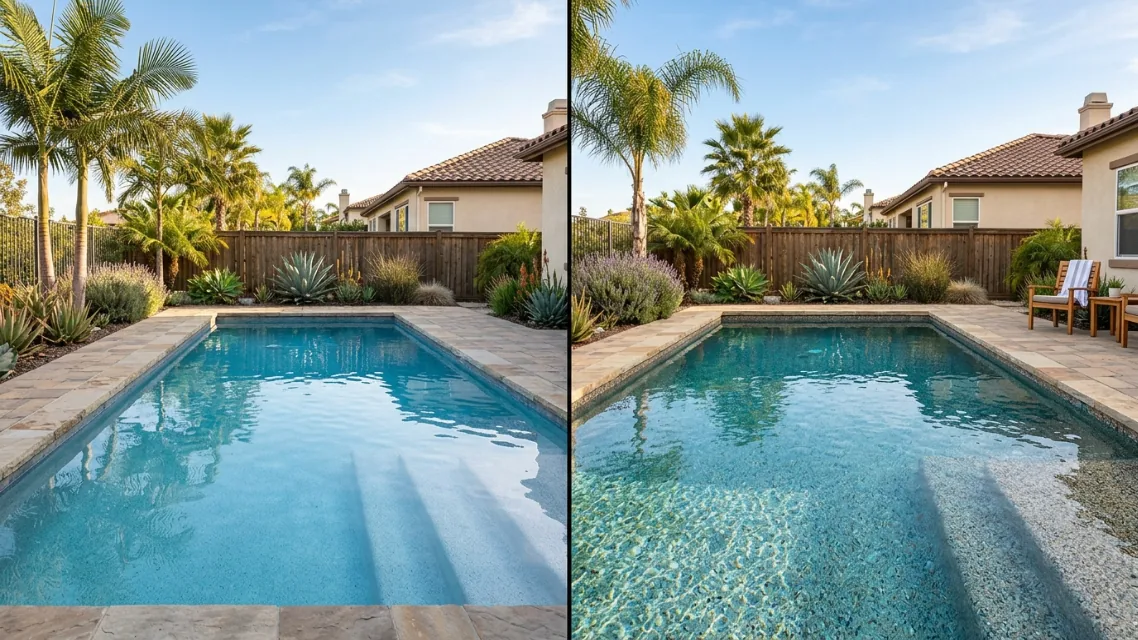
Completed Work
Owner-led since 1984
Why Choose Baja Pool Plaster
The finish matters. So does who is standing at your pool.
Ruben Castillo started in pool plastering in the early 1970s and opened his own plastering company in 1984. He settled permanently in San Diego in 1988 and has been re-plastering pools across San Diego County ever since — hundreds of pools over his career. When you call Baja Pool Plastering, you speak with the owner.
01
Estimates Done by the Owner
Since 1984 Ruben has personally handled every estimate — and hands you the number in writing at the pool, in minutes.
02
Pool Surfaces Are the Specialty
Re-plastering and resurfacing pool interiors is the whole business, not an add-on to general pool service — which is also what keeps our pricing affordable.
03
Repair First, Replaster Second
Some pools come back with an acid wash or targeted repairs. We would rather find the real problem than sell a full replaster.
04
Preparation Is Not Rushed
Most plaster failures trace back to poor surface preparation, so nothing new goes on until the shell underneath is sound.
05
Licensed, Insured, Local
A licensed California contractor — CSLB #452824 — working on San Diego pools, in San Diego conditions.
Our Process
A clear process from estimate to refilled pool
The same structured sequence on every project, so you always know what happens next. What your pool needs specifically is confirmed in your written estimate.
01
On-Site Inspection
Ruben looks at surface condition, shell integrity and any cracking or leaks, writes the estimate on the spot, and explains the work and how long it will take.
02
Drain & Surface Removal
The pool is drained and the existing interior is chipped or acid-washed back, depending on its condition.
03
Repairs & Preparation
Cracks, chips and structural imperfections are corrected before any new material is applied.
04
New Finish Application
Your plaster, quartz or pebble finish is applied evenly across floor, walls, steps and benches.
05
Fill, Startup & Walkthrough
The pool is refilled, chemistry is balanced through the critical curing period, and we review the finished surface with you.
Timelines depend on pool size, the condition of the existing surface, the repairs needed, the finish selected and the weather during curing. An on-site assessment is the only accurate way to scope your pool.
Selected Work
Pools we are proud to put our name on
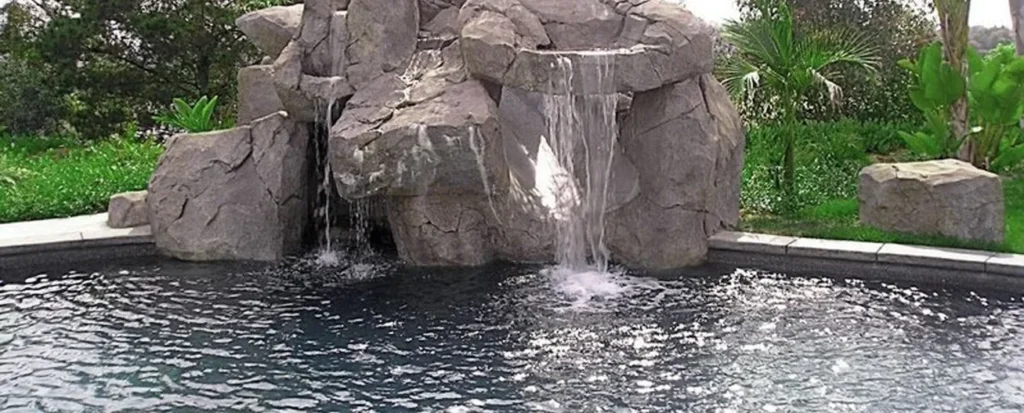
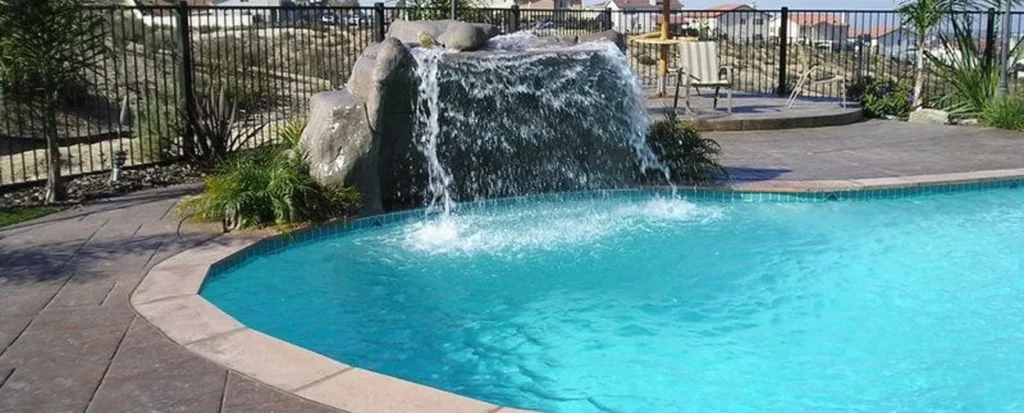
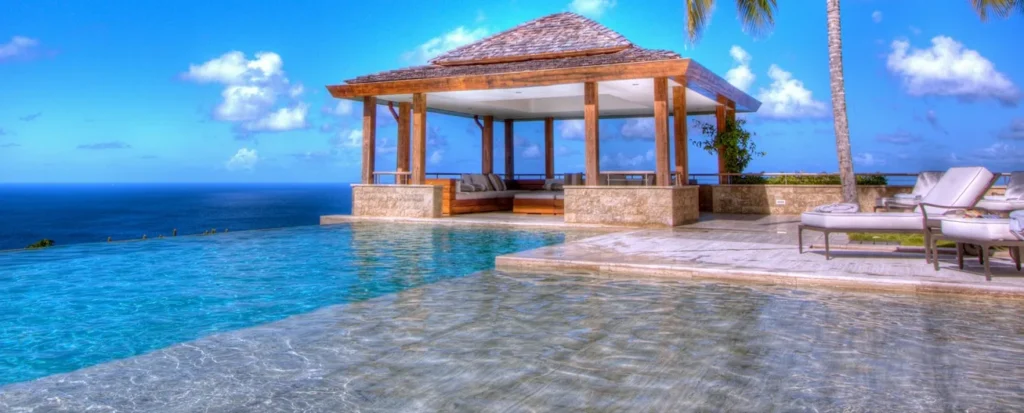
Completed pool work from Baja Pool Plaster. A list of completed pool plastering projects going back at least 20 years, along with client references, is available on request.
Service Area
Pool plastering & resurfacing across San Diego County
We work on pools throughout San Diego and the surrounding communities — inland areas like El Cajon and Lakeside, coastal and hillside neighborhoods like La Jolla, and nearby cities including La Mesa, Rancho Bernardo and Bonita.
San Diego pools get used nearly year-round, and constant sun plus local water mineral content wear surfaces differently than in regions with seasonal closures. Not sure whether you are inside the area? Call and we will confirm.

Coverage
San Diego County
Communities we serve
Across San Diego County
Other San Diego County communities served on request. Check your area
Homeowner Experiences
What clients say about their pool transformation
What customers have written about Baja Pool Plaster. Read the reviews on Google
If you want expert pool plastering with trustworthy service, Baja Pool Plaster is the company to call!
Willie Kim Google review
On time, excellent arrival notification, and follow-up to ensure satisfaction They did a fantastic job and offer first-rate service. Highly suggested.
Bernhard Meier Google review
Has tremendous knowledge of the products and took the time to listen to our needs and wants, This type of customer service cannot be found just anywhere.
Ramon Romero Google review
I’m really happy with the pool plaster work from Baja Pool Plaster. The finish looks smooth, clean, and professionally done.
Ruby Saltau Google review
Pool Owner Resources
Helpful guides for San Diego pool owners
Practical guidance from Baja Pool Plaster on replastering, resurfacing costs, surface maintenance and planning your next pool project.

Hiring & Planning Guide
If your pool’s plaster is looking rough, chalky, or discolored, a Pool Replastering Checklist is the smartest place to start.

Pool Cost Guide
Pool replastering typically costs less upfront and is the right call when your pool’s structure and surface are still basically sound…

Hiring & Planning Guide
Sun exposure, water chemistry swings, and everyday use all chip away at plaster over time, and without the right care routine, small issues turn into expensive repairs.
Frequently Asked
Questions San Diego homeowners ask before resurfacing
Short, direct answers to what comes up most. If your question is not here, call Ruben and get it answered for your specific pool — the advice is free.
San Diego Pools
See the finish in a real backyard

How do I know if my pool needs replastering?
Look for a rough, sandpaper-like texture, staining that will not scrub away, cracking or chipped areas, water that stays cloudy despite balanced chemistry, or plaster more than 15 to 20 years old.
The practical test is touch. Dirt and algae come off with brushing and chemistry; a worn finish does not. A physical inspection is the most reliable way to confirm which one you are dealing with. Our pool replastering checklist and pool surface maintenance guide go through the signs in more detail.
Is pool replastering the same as pool resurfacing?
Replastering means applying a new plaster finish. Resurfacing is the broader term and can include plaster, quartz or pebble.
Most homeowners use the two words interchangeably, and that is fine. What matters is choosing the right finish type for your pool’s age, use and budget. If you are weighing a bigger project, see pool replastering vs a full remodel and the pool renovation planning guide.
Does my pool always need to be replastered?
No. Some pools come back with an acid wash, an acid rinse, a chlorine wash or targeted repairs instead of a full replaster.
Because pool surfaces are our specialty, we can usually tell which category a pool falls into. We would rather get to the root of the problem so you spend the money where it actually matters.
What pool finish options are available?
Traditional plaster, quartz aggregate and pebble finishes, in a range of colors.
Plaster is the traditional and most affordable option. Quartz adds durability plus more color and texture variety. Pebble is the most durable and most textured. The right one depends on budget, appearance and how the pool is used. See quartz vs pebble, PebbleTec vs plaster and which surface lasts longer.
How long does pool replastering take?
It depends on pool size, surface condition and curing requirements — an on-site assessment is the only accurate way to scope it.
Every project moves through the same stages: draining, surface preparation, application and curing. How long each stage takes is driven by the size of the pool, how much repair work turns up, and the weather during curing.
Can damaged pool surfaces be repaired instead of fully replastered?
Often, yes — acting early on surface damage almost always costs less than waiting until a full resurfacing is the only option.
Hairline cracks, etching and localized staining can frequently be corrected as repair work. Once plaster is delaminating across the pool or has thinned down toward the shell, resurfacing becomes the sound choice. For cracks specifically, see DIY vs professional pool crack repair.
What affects the cost of pool replastering?
Pool size and surface area, the condition of the existing interior, the repairs required, the finish selected, and site access.
Two pools of the same size can price differently if one needs significant crack repair or a premium finish. Estimates are free, done on site and given to you in writing — and the advice that comes with them is free too. For typical ranges, see resurfacing vs replacement costs and replastering vs resurfacing costs.
Is your pool work guaranteed?
Yes. Standard guarantees apply to all swimming pool work Baja Pool Plaster performs.
Additional guarantees on top of the standard ones are available on request — ask Ruben about them when he writes your estimate.
How do I choose a pool plastering contractor?
Check for an active CSLB license, ask for references and completed projects, and get a written, specific estimate.
Baja Pool Plaster is licensed (CSLB #452824), provides client references and a list of completed projects on request, and Ruben writes every estimate himself. See how to choose a pool plastering contractor, questions to ask before hiring and licensed contractors vs handymen.
Do you serve areas outside of San Diego proper?
Yes. We work with homeowners throughout San Diego and nearby communities across San Diego County.
That includes inland areas such as El Cajon and Lakeside, coastal and hillside neighborhoods like La Jolla, and cities and neighborhoods including La Mesa, Rancho Bernardo, Bonita and Point Loma. Call to confirm availability for your address.
Start Your Project
Ready to give your pool a fresh new finish?
Call and Ruben will come out, look at the pool and hand you a written estimate on the spot. Estimates and advice are free.
Request a free estimate
Three details and Ruben will call you back to arrange a look at the pool.
"*" indicates required fields
Or call (619) 458-3443.